


Simpson Lab Research Leads to Real-World Treatment
The Simpson Lab researchers often spend their days trying to uncover new treatments for rare, painful skin blistering disorders that lack therapies. Recently, the lab did just that – their research findings informed the treatment of two patients with severe Darier disease.
Darier disease is a rare genetic condition characterized by blistering lesions and recurrent skin infections. Unfortunately, it has no FDA-approved therapy. Dr. Cory Simpson, MD, PhD, FAAD, UW Assistant Professor of Dermatology and head of the Simpson Lab, sees patients with Darier disease at a weekly UW subspecialty clinic dedicated to rare skin blistering disorders.
“Despite knowing its exact cause for over 25 years, there has been no development of a targeted and effective treatment for patients suffering from Darier disease,” Simpson said.
Until recently, that is. Through their research, Simpson and his team discovered that an existing medication typically used for treating cancer reduced blistering in their model of Darier disease.
Nearly a year ago, a dermatologist in Spain read Simpson’s research paper and treated a patient with severe Darier disease using the medication. As highlighted in a UW Medicine Vitals article, the patient’s skin condition improved significantly.
Recently, a second patient with Darier disease received the same treatment that was actually prescribed for her melanoma. The investigators reported Darier disease lesion improvement within 3 weeks, near-complete remission by 3 months, and no recurrence for a year at the time of publication.
"While we still need more evidence, it was incredibly rewarding to see my lab’s research cited in both studies and to witness the positive impact of the treatment on these patients. We hope our laboratory data along with these cases will lead to a clinical trial for Darier disease,” Simpson said.
How it started: Simpson Lab develops Darier disease models
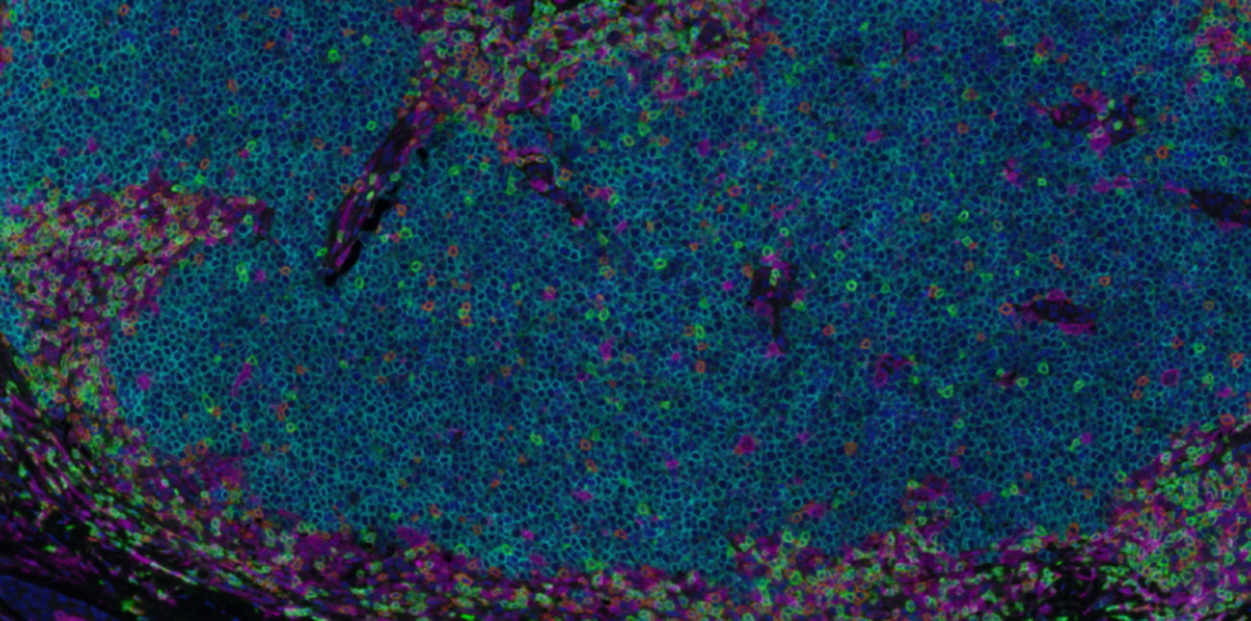
Motivated by his patients and his passion for translating basic science research into novel therapies, the Simpson Lab set out to engineer a new Darier disease “organotypic” model, which produces nickel-sized pieces of skin that are grown in the lab and used to study rare diseases, allowing his team to test out treatments in a pre-clinical setting before involving patients.
In collaboration with the Fred Hutch Cancer Center’s Gene Editing Facility, Simpson’s team is leveraging the DNA editing system, CRISPR/Cas9, which allows scientists to change the genetic code of skin cells called keratinocytes. Recently, they used this tool to insert the “typo” that is known to cause Darier disease in a specific patient.
It was an incredibly exciting day in the lab when a recent set of skin cultures looked very much like a biopsy from a patient with Darier disease. Now they have a personalized skin model that can be used to test out new therapies with the goal of inspiring future clinical trials.
Taking it a step further: Simpson Lab "borrows" FDA-approved drug to potentially treat Darier disease and other rare skin blistering disorders
Simpson’s lab has published a series of papers that discovered a clever way to borrow a drug that has already been FDA-approved for another disease and potentially use it to treat rare skin blistering disorders.
In a 2023 publication in the journal JCI Insight, Dr. Simpson’s team found that existing drugs targeting an enzyme called MEK, which are primarily used for melanoma and other cancers [JB4.1], helped skin cells stick together more strongly and reduced the blistering seen in his model of Darier disease. The team then extended these results to show that MEK inhibitors also worked in a model of a much more common skin blistering disorder called Grover disease, which looks the same as Darier disease under the microscope.
These papers led Simpson to propose that MEK inhibitors might be re-purposed to treat a variety of skin blistering diseases that he sees in the clinic. Most recently, Simpson Lab member Jessica Ayers found that MEK inhibitors, in conjunction with a second drug targeting an enzyme called ROCK, made skin cells resistant to blistering in a model of Hailey-Hailey disease, known as the sister disorder of Darier disease due to their overlapping clinical features and similar gene targets.
Simpson Lab members speak nationally about their research
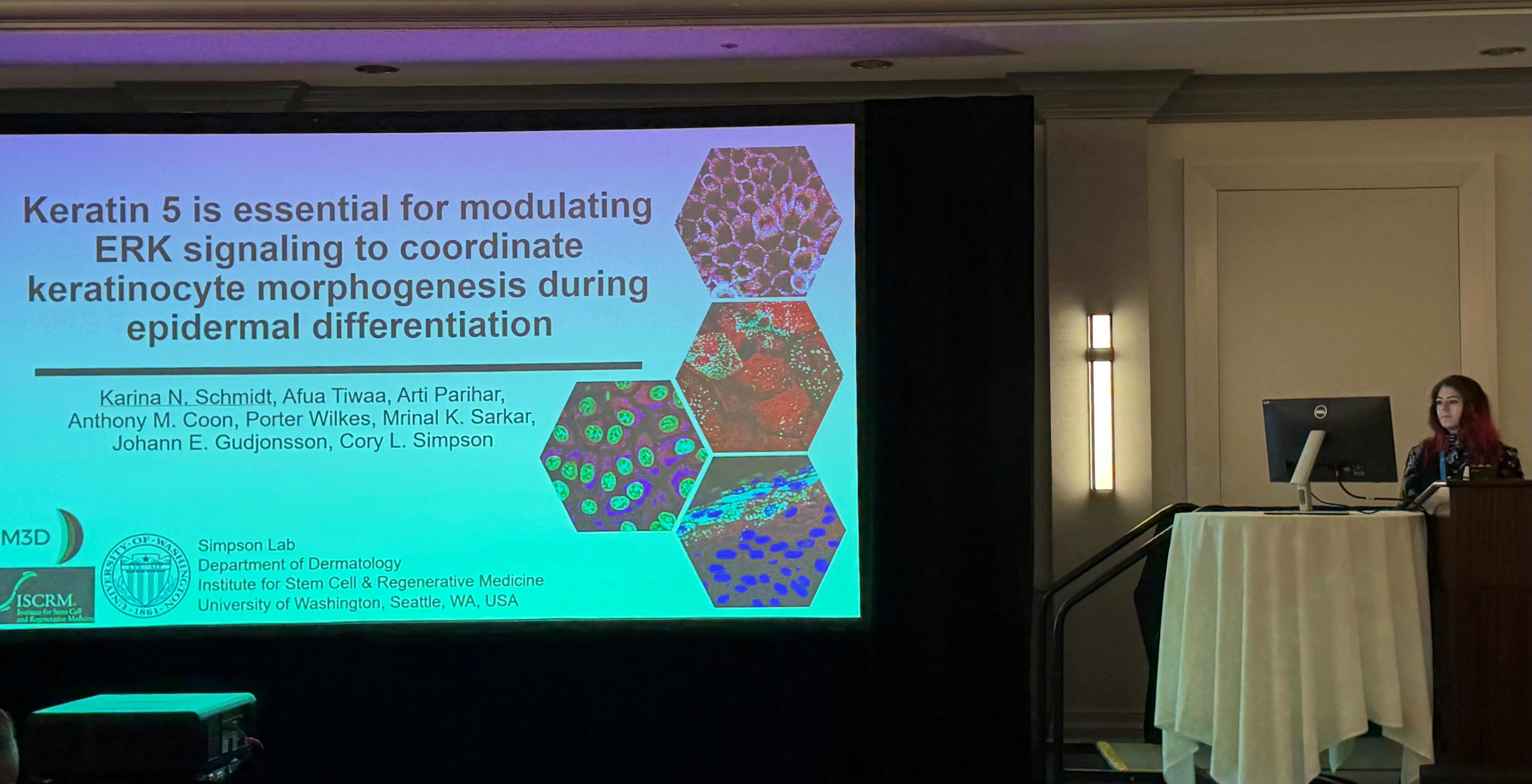
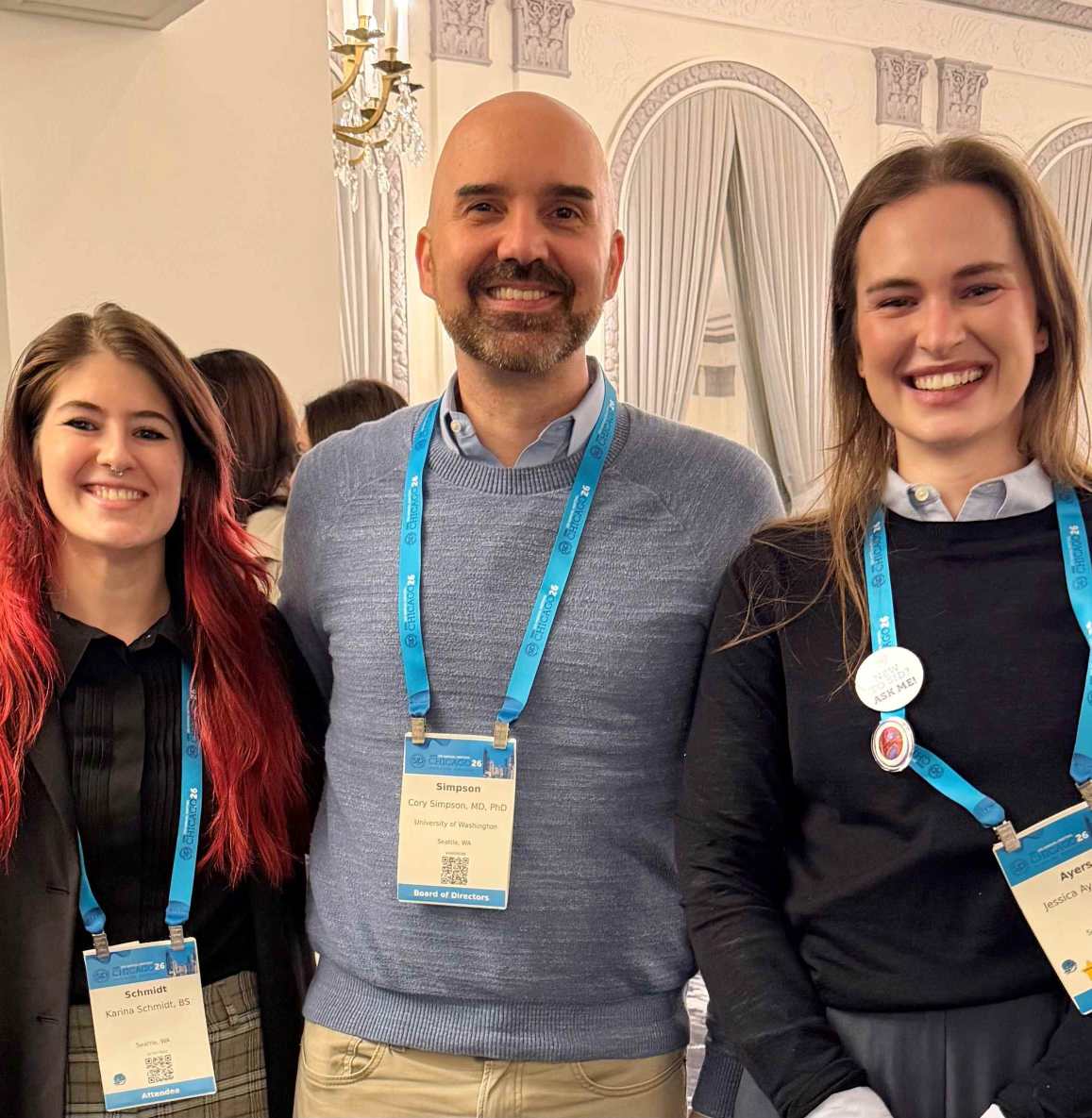
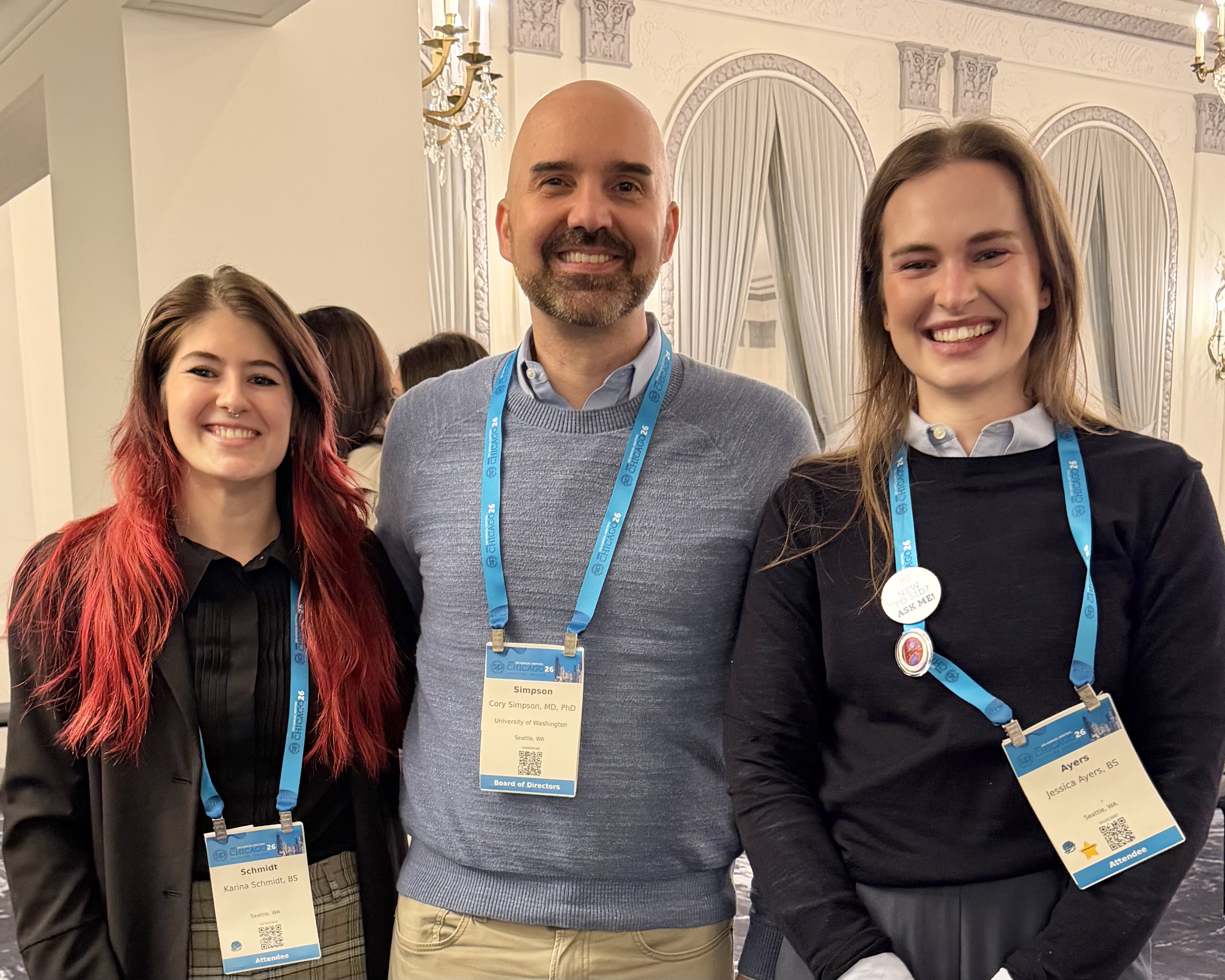
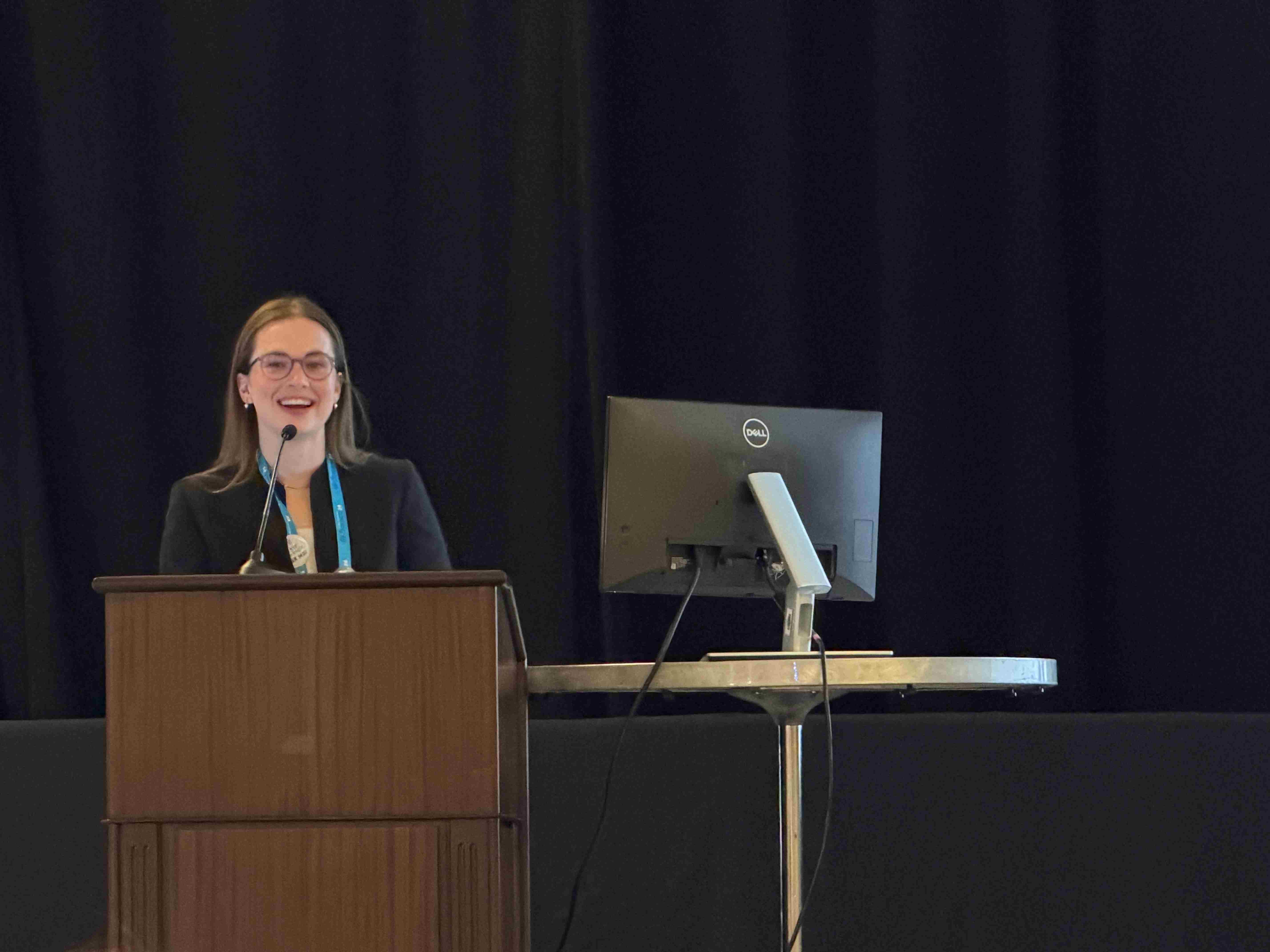
The Simpson Lab recently returned from a whirlwind tour showcasing their research on rare skin blistering disorders at the Society for Investigative Dermatology (SID) annual meeting in Chicago. UW Dermatology PhD students, Jessica Ayers and Karina Schmidt, were both invited to give platform presentations on their work to build new models of Hailey-Hailey disease and epidermolysis bullosa, while Dr. Simpson was invited to speak at the Epidermal Differentiation Disorders (EDD) Symposium.
The international gathering brought together scientists, clinicians, patient advocates, industry representatives, and NIH/NIAMS leaders who are aiming to finally move the needle for patients with rare skin disorders that lack effective therapies. Participants shared ideas, tools, and strategies covering the full range of research from laboratory models to clinical trials with the goal of building collaborations among multiple rare skin disease communities.
The symposium was organized by the Pachyonychia Congenita (PC) Project, Decoding Darier’s Disease and the Foundation for Ichthyosis and Related Skin Types (FIRST), which previously supported the Simpson Lab through its Research Grant Program. Dr. Simpson now serves on the FIRST Medical and Scientific Advisory Board, but noted that he was actually introduced to the FIRST community by the late Dr. Phil Fleckman, a long-time UW Dermatology faculty member and physician-scientist who served for decades on the Board of FIRST, which supports patients with EDDs and funds research into these rare diseases.
At the EDD Symposium, Dr. Simpson presented hot-off-the-presses results from his Darier disease model that his lab developed in conjunction with a generous donor and close collaborators in the lab of Kathleen Green, PhD at Northwestern University, where Simpson completed his MD and PhD degrees in 2012 and first became interested in rare skin blistering disorders.
Looking to the future
Though further research is needed to specifically test the safety and efficacy of MEK inhibitors for treating these rare diseases, Simpson is optimistic that his lab’s work may eventually inspire a clinical trial and ultimately an FDA-approved therapy for his patients.
While excited to build on his lab’s momentum and the synergy that is growing for these rare diseases, Dr. Simpson acknowledged that, “Especially at a time of reduced federal grants available from the NIH, support from generous patients, family members, and other donors remains critical to allow us to continue research into these rare skin diseases.”
The UW Department of Dermatology has established a donor fund dedicated to Rare Skin Disorders Research for anyone wishing to support the Simpson Lab’s research: